
In today’s data-driven world, organizations rely heavily on analytics to make informed decisions. Traditionally, semantic models have played a key role in transforming raw data into meaningful insights through structured reporting and dashboards.
However, with the rise of AI-powered platforms like Microsoft Fabric, a new approach is emerging — Fabric IQ. This introduces a more intelligent and interactive way of working with data, enabling users to move beyond static reports to dynamic, AI-driven insights.
In this blog, we explore the differences between Traditional Semantic Models and Fabric IQ, and how this shift is redefining modern analytics.
Understanding Traditional Semantic Models
Traditional semantic models act as a structured layer between raw data and end users. They organize data into:
- Fact and dimension tables
- Relationships between datasets
- Measures and calculations
- Business logic
These models ensure that data is consistent, reliable, and easy to use in reporting tools like Power BI.
However, they come with certain limitations:
- Require technical expertise (data modelling, DAX)
- Are static in nature (changes require manual updates)
- Focus mainly on reporting rather than insight generation
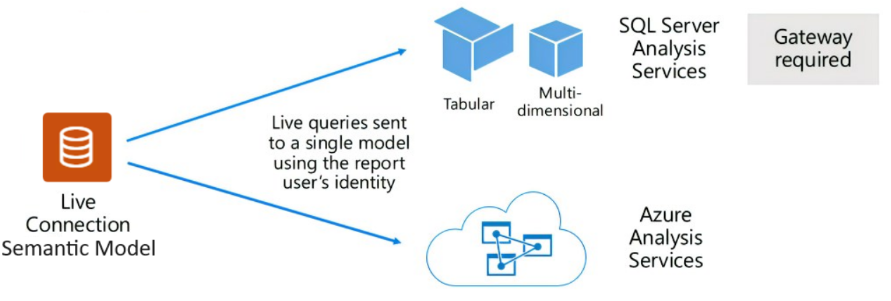
Source: Microsoft
Understanding Fabric IQ
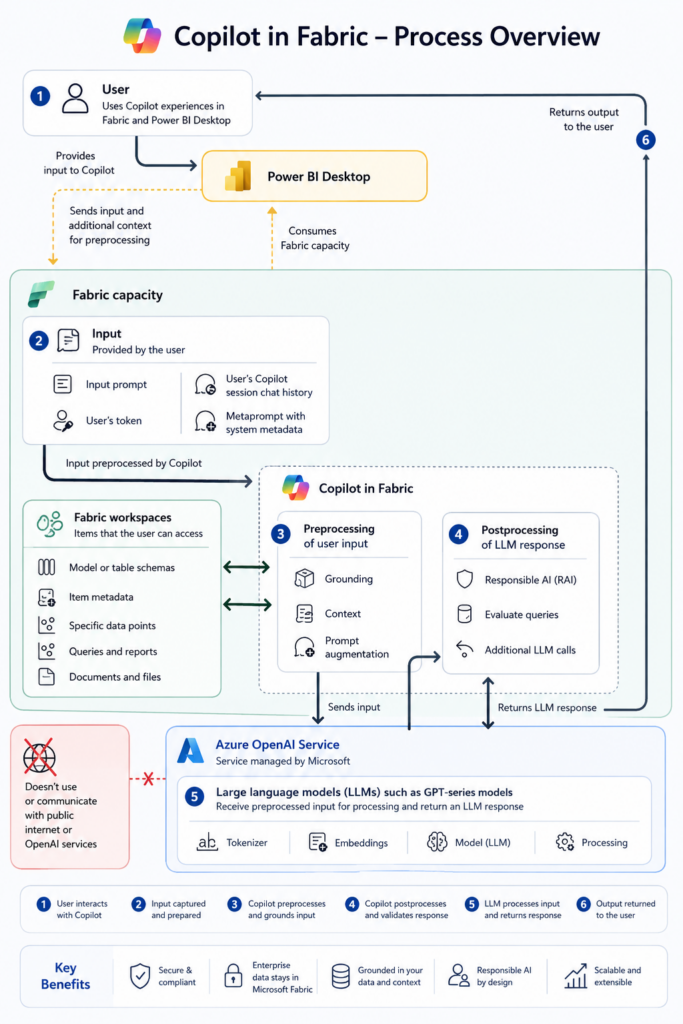
Fabric IQ is an AI-powered intelligence layer that enhances how users interact with data.
Instead of relying only on predefined structures, it enables:
- Natural language queries
- Automated insights
- AI-driven analysis
Users can ask questions like:
“Why did sales decrease last quarter?”
Fabric IQ interprets the query, analyses the data, and provides a clear explanation along with insights, making data more accessible to both technical and non-technical users.
Key Differences
| # | Area | Traditional Semantic Model | Fabric IQ |
|---|---|---|---|
| 1 | Primary purpose | Optimized for analytics and reporting, defining tables, relationships, measures and business calculations for Power BI. | Creates a business intelligence/semantic layer that represents enterprise concepts and relationships for analytics, AI agents and operational scenarios. |
| 2 | How the business is modeled | Primarily uses a tabular model: tables, columns, relationships, hierarchies and DAX measures. | Adds an ontology where concepts such as Customer, Product, Asset or Shipment can be explicitly defined along with their properties and relationships. |
| 3 | Relationship intelligence | Relationships typically connect tables for analytical queries and calculations. | Uses ontology + graph capabilities to represent and traverse richer relationships between business entities, enabling multi-hop reasoning. |
| 4 | Data scope | Usually represents data prepared for a particular analytical domain or reporting solution, although composite models can combine multiple sources. | Designed to provide shared business context across domains and Fabric data sources, including semantic models, lakehouses and operational/real-time data. |
| 5 | AI readiness | Can be used by AI and Fabric Data Agents, but its structure and metadata need to be prepared carefully for accurate AI responses. | Designed specifically to ground AI agents in common business terminology, relationships and rules, helping agents reason using business context. |
| 6 | Typical consumers | Primarily Power BI reports, dashboards and analytical applications. Direct Lake models, for example, serve Power BI queries directly from OneLake data. | Intended for Power BI, Fabric agents, AI applications, workflows and other intelligent experiences that need reusable business semantics. |
| 7 | Enterprise semantic consistency | Business definitions may be managed within individual semantic models, which can require coordination when multiple models represent the same concepts. | Provides an enterprise ontology/shared business vocabulary that can align existing semantic models so concepts and KPIs remain consistent across reports and agents. |
How They Work Together
It is important to understand that Fabric IQ does not replace semantic models.
Instead:
- Semantic models provide trusted, structured data
- Fabric IQ builds on top of them to deliver intelligent insights
This combination ensures both data accuracy and analytical flexibility.
Conclusion
The evolution from Traditional Semantic Models to Fabric IQ marks a significant shift in analytics from structured reporting to intelligent, AI-driven decision-making.
While semantic models remain essential for ensuring consistency and governance, Fabric IQ adds a new layer of intelligence that makes data more interactive and accessible.
Organizations that leverage both will benefit from:
- Faster insights
- Improved decision-making
- Greater accessibility to data
Ultimately, the future of analytics lies in combining strong data foundations with AI-powered intelligence, enabling users to not just view data, but truly understand it.
| Tags | Microsoft Fabric |
| Useful Links | |
| MS Learn Modules | |
Test Your Knowledge |
Quiz |